

Filosofia de Boteco
From Privileged Policy to Empathic Policymaking

NOTE: Due to the Paris Peace Forum last week, my publication was disrupted — kinda like the buses I was taking in Paris that suddenly terminated because the lines ran too close to the Forum venue where VIPs would be. But I’ll be back on track this week! Please excuse the short break.
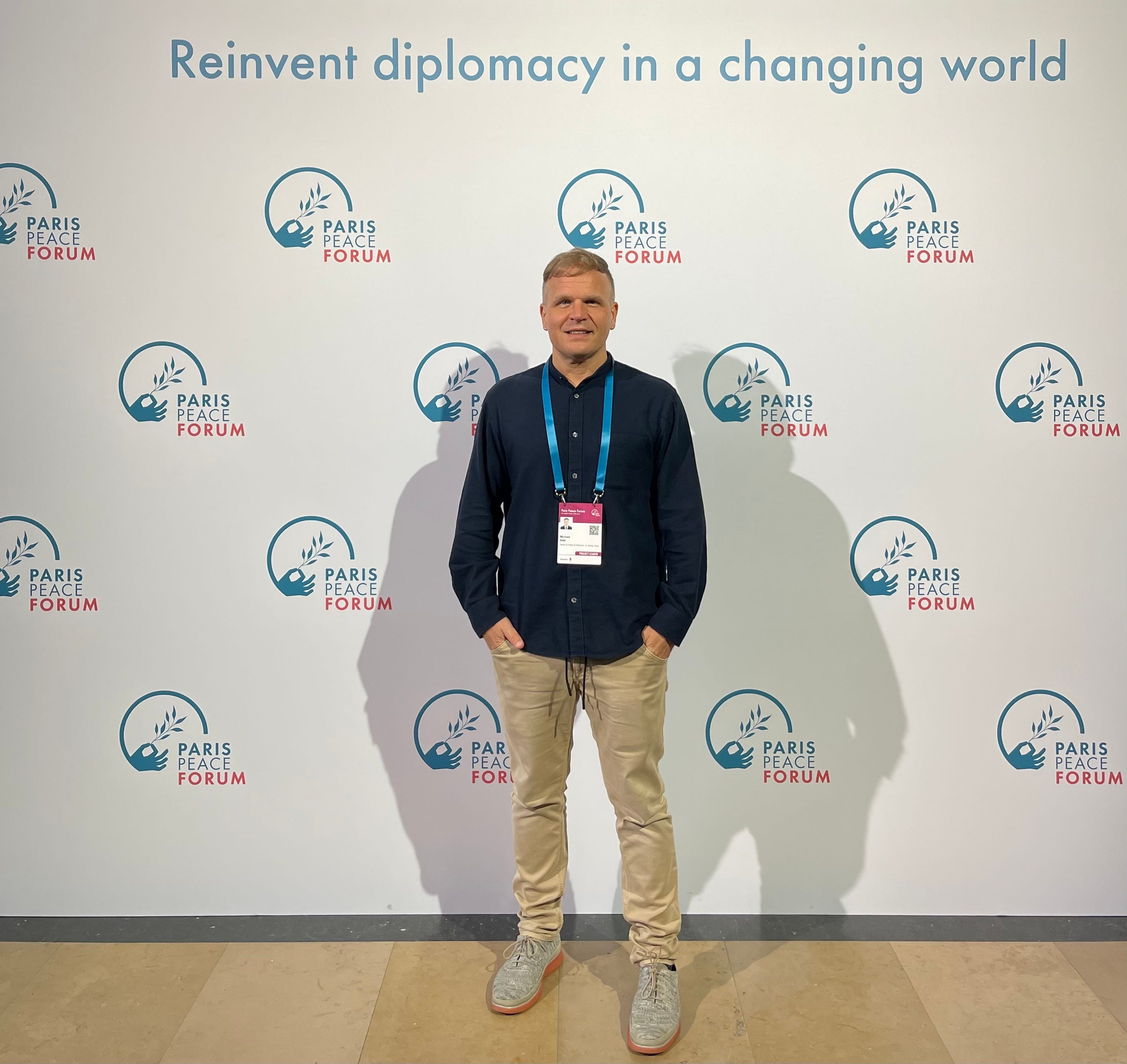
This week I spoke at the Paris Peace Forum (PPF), a global gathering of policymakers, peacebuilders, and organisations addressing the world’s most pressing challenges. But what brought me unexpected joy wasn’t on the agenda — it was who I met.
Actually, two people.
I met two readers of this very newsletter who were strangers until this week. One told me she read my work when I introduced myself; the other searched me out in the crowded halls of the Palais de Chaillot to share that she’d been reading (margin*notes)^squared regularly and wanted to meet in person when she saw my name on the agenda. She is Brazilian-French and after chatting for some time she shared an interesting Portuguese phrase with me that stuck: filosofia de boteco. The closest translation might be barstool philosophy. It’s the serendipitous moments when you talk about life, politics, and society not as an expert, but as a human, sharing lived experiences, observations and reflections over a drink or a coffee.
Today’s article is a product of that kind of interaction. It may meander a bit, but it’s honest. This isn’t a policy memo and not a response to some corporate policy. Just a set of observations shaped by my encounters at the Paris Peace Forum, and by an early walk in Paris as the sun was rising over the nation’s monuments. Today’s dispatch is a culmination of conversations – some filosofia de boteco – I’ve had at the Paris Peace Forum, and with myself on that morning walk.
From Convenience to Consciousness
During a panel or two at PPF I found myself drifting. I wasn’t particularly interested in that particular speaker, or maybe what they were saying wasn’t terribly compelling to my mind (or at least something I already knew). So, like many others around me, I instinctively reached for my phone. Emails, IG, text messages. Linkedin. A modern reflex to respond to moments of disinterest or boredom or just, well, not wanting to confront just being still.
It wasn’t until I met my Brazilian-French reader (and new friend!) that I could put a finger on what was happening to me: technology has eroded our ability to tolerate things. We don’t tolerate boredom. We don’t tolerate discomfort. And increasingly, we don’t tolerate the unfamiliar. That’s the word she used: “tolerate.” We just can’t do it anymore and we drift off into our own curated digital worlds in response.
It seems to me that we need to tolerate more.
Technology has eroded our ability to tolerate things. We don’t tolerate boredom. We don’t tolerate discomfort. And increasingly, we don’t tolerate the unfamiliar. That’s the word she used: “tolerate.” We just can’t do it anymore and we drift off into our own curated digital worlds in response.
Then, before heading to Orly airport to fly to Portugal, I decided to walk around my neighborhood in Paris’ Bastille area. I consciously brought no earbuds (so no music, no podcasts), and I even forgot to bring money with me to buy a pain au chocolat and a coffee. So it was just me, the crisp autumn air, and the city waking up.
I kept my phone in my pocket, except to check directions. It felt a little strange at first. But the distance from tech seemed to create some space for reflection and thinking.
I noticed a homeless man on the bench beside his makeshift tent, head bowed as if in shame or exasperation with his lot in life. The people on the sidewalks — some rushing with purpose with earbuds, others aimlessly scrolling. I saw five university students dressed up in matching Halloween costumes. Tourists taking photos. I saw another homeless man, the same man I’d seen for days, sitting on the ground outside the nearby boulangerie, quietly eating bread that someone had given him. Smiling.
We can’t live on bread alone, I thought. Everyone needs vegetables and fruits and proteins. Why do we seem to only offer cheap bread?
The Tech We Carry, The Lives We Live
As the time passed and I was thinking about getting to Orly Airport, a very simple decision confronted me: public transport to Orly (15 euros, 52 minutes), or a Bolt (26 euros, 35 minutes + the convenience of not lugging my suitcases). The old me – the tech exec me, flying business, staying in five-star hotels – would never have paused to even think about this, let alone compare prices. App-based ride. Spacious SUV. Done and done.
But now? Representing a lean NGO, cost-conscious, and also increasingly aware of our responsibilities to society and the environment… In that moment….
…I realised something obvious but also I think pretty profound: lived experience absolutely shapes our instincts, which shape our decisions, which shape our policies. Which shape our world.
Privileged Policy vs. Empathic Policymaking
I’ve written here before about privileged policy — when laws and rules that govern our online and offline spaces are shaped by those whose experiences are buffered by convenience, wealth, and access. This trip once again reminded me just how deep that privilege runs.
I had the freedom to decide, ten days before the event, that I would attend and speak. No need to worry about visa delays. No embassies to book appointments at. No need to figure out exactly how I’d cover costs. My colleagues from Indonesia and India who also attended weren’t so lucky. Their pre-Forum experience was filled with expensive navigation of the Schengen visa process. I also navigated Paris with ease — google maps in hand, French on my lips, apps for pretty much everything I needed. No need to find wifi – my roaming would do just fine.
Later, I had drinks with former colleagues from an NGO I once led. As we left to head back late in the evening, one opened her phone to map a longer route home to avoid a metro transfer in a neighborhood in which she didn’t feel safe. As a man, I didn’t even think twice about the area I’d be walking through.
That not needing to think or plan — that’s privilege. One hundred percent.
What We Reward, Who We Hear
At the PPF, I watched some polished executives and the well-connected — media-trained, coached, PR-prepared — owning the stages they were on. Everything about them, from their language, their cadence, and their accents all signaled authority. Even when they said nothing particularly new. Or compelling. These same folks would then wander off to the “delegates lounges” and have their bilateral meetings with other movers and shakers.
I couldn’t help but wonder: What if policymakers took bilateral meetings with grassroots leaders instead of the glossy, rehearsed, and resourced ones? What if we celebrated substance over style? Empathy over polish? Created more moments for filosofia de boteco?
By the end of the second day when civil society projects to be incubated by the PPF over the next year were showcased from the mainstage, the crowd looked leaner and younger. Maybe the veterans left for side meetings and networking dinners or sightseeing. Maybe the younger ones had fewer invites — or maybe they simply cared more. Either way, they stayed.
I wondered how do we get our messages across to the “important people” who don’t show up other than to talk at us. How do we incentivise such folks to stick around longer and lean into more serendipitous encounters that create more shared experiences.
What We Need More Of
I want to be clear: I’m not trying to shame those who have privilege. I benefit from it, if only by virtue of my gender and the colour of my skin. I do face bias as a sexual minority, but generally I must admit that life is, in fact, easier for me. And if we define privilege as the absence of obstacles, then I must also admit that I’m greatly privileged.
Privilege is the absence of obstacles.
This means that those who hold privilege — as policymakers or policy shapers — have a responsibility to name it, challenge it when it becomes a barrier, and actively adopt empathy as a core principle. Not just empathy as a virtue, but radical empathy as an essential tool in building policies that are fair, inclusive, and grounded in the lived experiences of others.
I think our world, and our policymaking, would be greatly improved if we got more people to:
Put their phones away and tolerate perspectives that don’t immediately interest them — maybe opening minds to ideas that once seemed far-fetched or impossible.
Choose public transport when they can, and sit in the stillness of a city in motion – maybe experiencing new sensations, inconveniences, delights, and perspectives.
Recognise the enormous privilege of being able to shape laws, narratives, and futures – maybe experiencing how radical empathy can shift deeply held perspectives or reshape what seems immovable.
Make meaningful room for the historically marginalised, unheard, under-resourced, unwanted and inconvenient voices to lead, not just to speak – and maybe realising that leadership comes from unexpected places, from the periphery, and outside your zones of comfort.
