

Reading As Resistance
My Most Favourite Books in 2025

Each morning this year began usually the same way: just before the tropical sun quickly rose, I rolled out my yoga mat, breathed into the day, sent metta to loved ones (and not-so-loved ones) and then brewed my favourite Vietnamese coffee. Then, for an hour or two I’d read. Explored new ideas. Inquired about old questions. And often caught myself muttering sounds of surprise (‘Oh really?” “I’d no idea!” “How interesting”) and usually going down rabbit holes searching for more information online.
Books help me understand the world. I’ve got at least 2,500 of them at home. They give me ammunition to ask better questions. And often they are how I find the words and language for things I’ve long felt but never named. One book often leads to another. Or I get inspired from a reference in a podcast, a friend’s recommendation, or a footnote in an article.
Oh, and my books are tabbed to death with stickies to help me find intersting quotes and references!
This year was no different.
I set myself a goal of 100 books and ended the year at just over 70. It’s a slight miss, but I’ll blame that on travel and a few big projects and starting some new work with AI Safety Asia, an amazing NGO at the cutting edge of AI governance in my region. The book count doesn’t matter as much as what I gained from them: new ways of seeing the world around me. And on more than one occasion they inspired some of my writing here in (margin*notes)^squared.
Reading Toward Equity and Justice
My guiding principles in life are equity and justice. On these, I make zero compromises. So I often gravitate to books that interrogate systems of power: who holds and hoards it, who’s excluded from it, who’s damaged and hurt by it, and how we build something better.
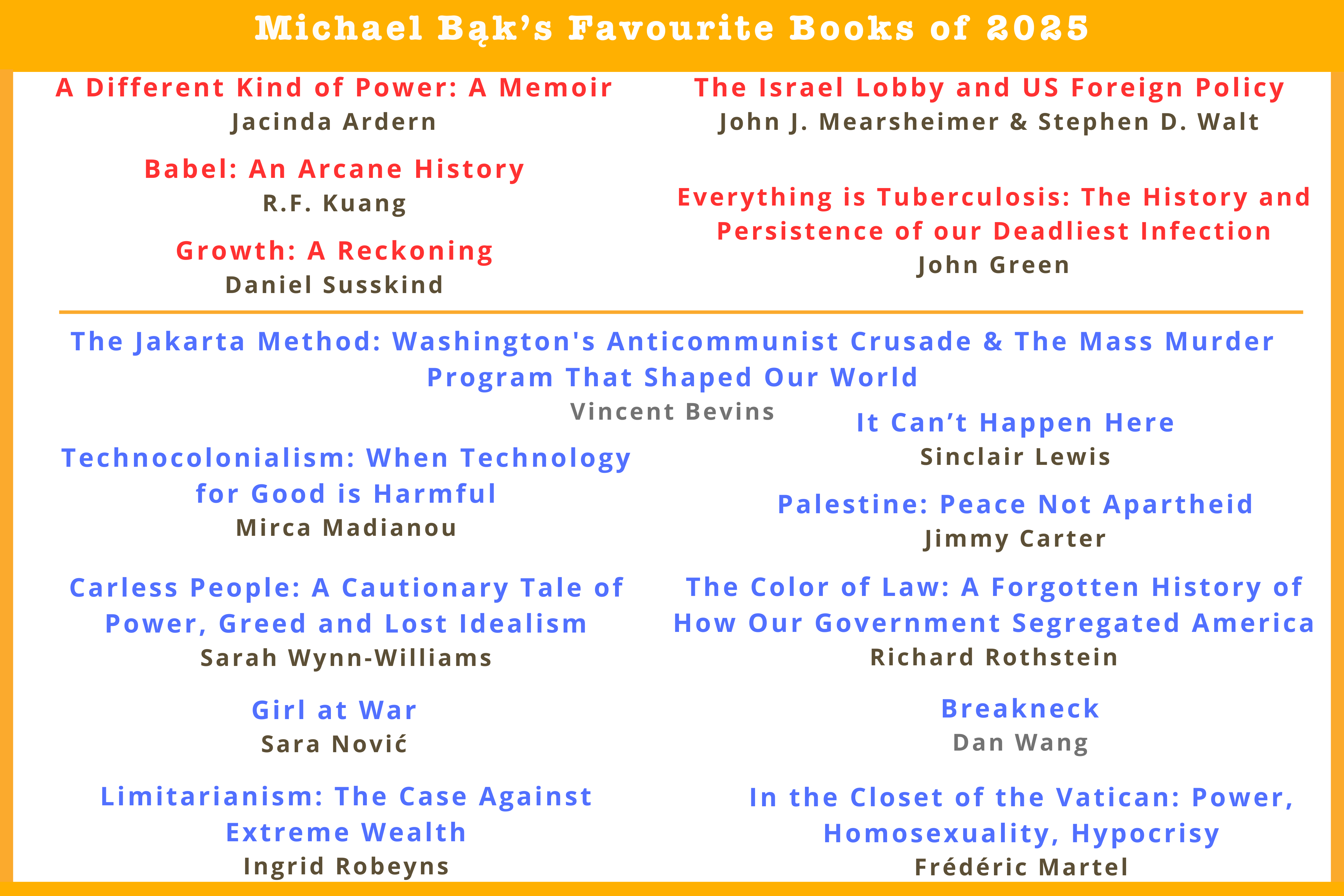
John Rawls’s A Theory of Justice helped me revisit some foundational ideas, while Ingrid Robeyns’s Limitarianism: The Case Against Extreme Wealth brought great clarity to something I’ve believed in but couldn’t quite articulate: that massive wealth at the top is as corrosive to social systems as injustice at the bottom.
Like many, I’m deeply concerned with the rights and dignity of marginalised people and the genocide that we see in plain sight on our screens every day. So this year I read widely on Palestine and Israel, the Israel lobby, American foreign policy and even tuberculosis, through John Green’s Everything is Tuberculosis, a stunning account of the world’s most persistent and unjustly ignored disease – and the bias, discrimination, shame and pain that follow it.
And I must say that Jacinda Ardern’s memoirs (“A Different Kind of Power”) is simply amazing. Yes, we REAlly can have a different kind of leadership, built on empathy and inclusion and justice and equity. She shows us that it is indeed possible in our world today. I had the joy of having a bilateral with Jacinda at the 2023 Paris Peace Forum and I’ll never forget that. We are better because of leaders like her.
Jakarta and the Margins
A special thanks to my new colleague Zar who recommended The Jakarta Method by Vincent Bevins. I was stunned to learn that the word Jakarta — the city I called home for nearly a decade — has been in fact a euphemism across the Global South for U.S.-supported mass killings during the Cold War, especially in Latin America.
This book didn’t just change what I know; it changed how I understand place, memory, and geopolitical violence. It got me to dive deeper into the Asian-African Conference in Bandung in 1955 and the struggles non-aligned leaders faced – which I have written about here, too.
Mirca Madianou’s Technocolonialism gave me another key insight — and the vocabulary that I very much needed. Her articulation of how digital technologies reproduce colonial patterns in the Global South gave me a word I now use often: technocolonialism. I was honored to speak at one of her conferences earlier this year, and her thinking continues to shape mine around post-colonial experiences and neocoloniality in the governance of frontier technology.
Power, Privilege & Platforms
Sarah Wynn-Williams’s Careless People — which I read in a couple days — offered a devastating, inside look at the cost of ambition and idealism within tech. Sarah was initially my hiring manager at Facebook, though she left before I started. (And I swear there is a nameless reference to me in there — the human rights guy she wanted to hire in Bangkok!) Her reflections on greed, invincibility, and the slow corrosion of values inside massive platforms is essential reading for anyone building or participating in the digital world. Even if you walk away convinced of only half the stories, that should be enough to light a fire under you.
Unexpected Pairings with Big Insights
Some of the most powerful reading moments this year came from strange but timely book pairings. Reading The Color of Law right after Jesus and John Wayne deepened my understanding of how white Christian nationalism has shaped — and continues to distort — American politics. It helped me understand the performative cruelty, racism and toxic masculinity we see spreading like plague across the American political landscape. I didn’t plan to read them back to back (and still not sure how I came across them), but I’m so glad I did. You should, too.
Frédéric Martel’s In the Closet of the Vatican was long (600 pages or so — but packed full of information from hundreds of interviews he conducted with church officials around the world) and utterly fascinating. It revealed how gay men — seeking protection from the judgement of family and society — historically gravitated toward the Church, and then unintentionally setting up new layers of secrecy and political contradiction. The hypocrisy it exposes is staggering. And I read this all while simultaneously reading about liberation theology!
The Full List: My Favorite Reads of 2025
Im also sharing here an almost full list of the books that stayed with me this year (I’ll spare you from the ones that just weren’t worth it). You’ll find politics, memoir, global health, inequality, religion, and a touch of fiction and speculation. Let’s call it my literary Mix Tape. I hope you’ll find something that calls to you.
These books represent hundreds of hours of early-morning learning, questioning, reflecting, and connecting dots. I’m grateful for the ability to read, to write, and to explore ideas with all of you.
📬 If you’ve read any of these, I’d love to hear your thoughts.
📚 And if you’ve read something that challenged or changed you this year—please send it my way.
Here’s to more curiosity, more justice, and more beautiful mornings with coffee and books in 2026.
Tech and Tech Policy
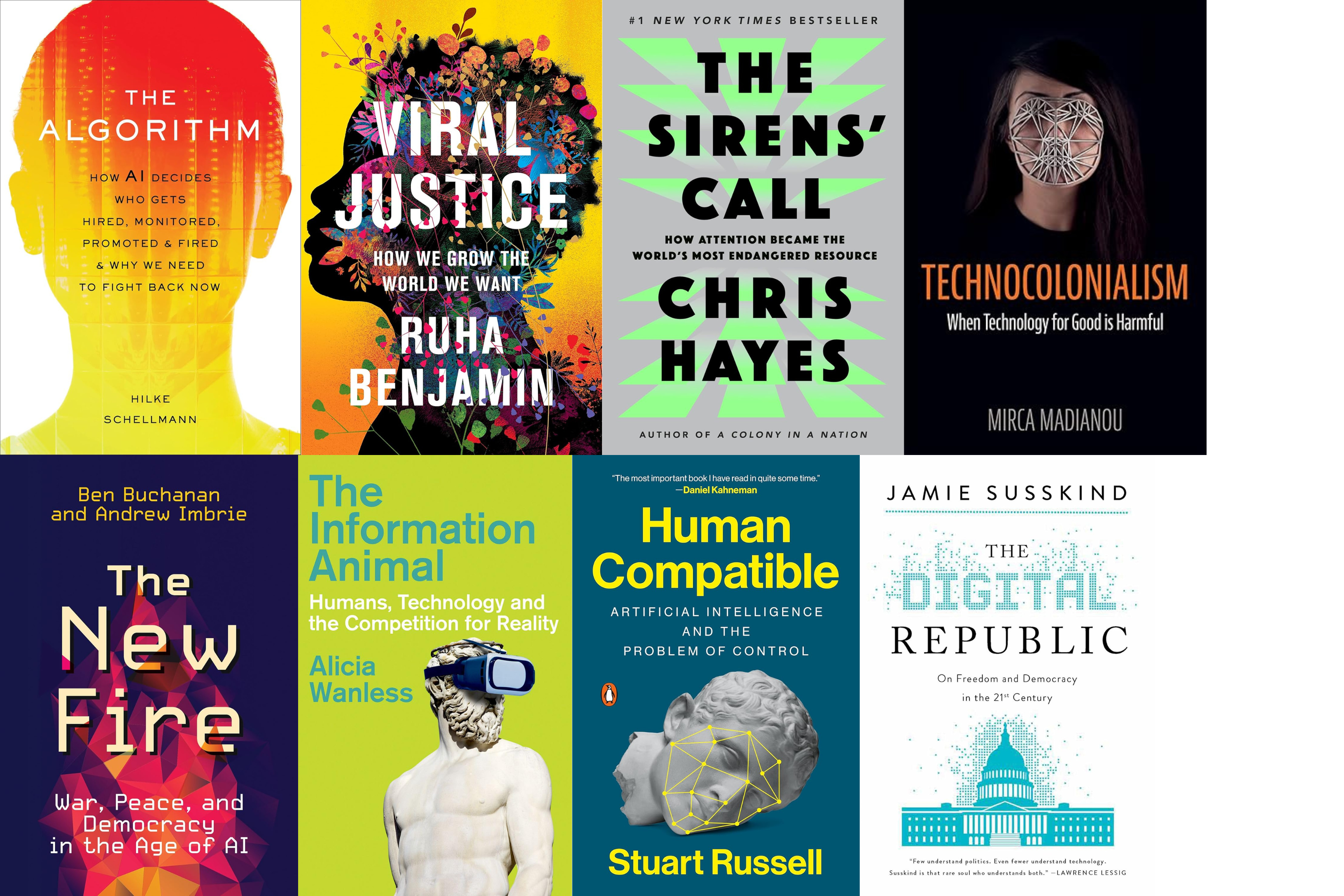
Technocolonialism: When Technology for Good is Harmful, by Mira Madianou
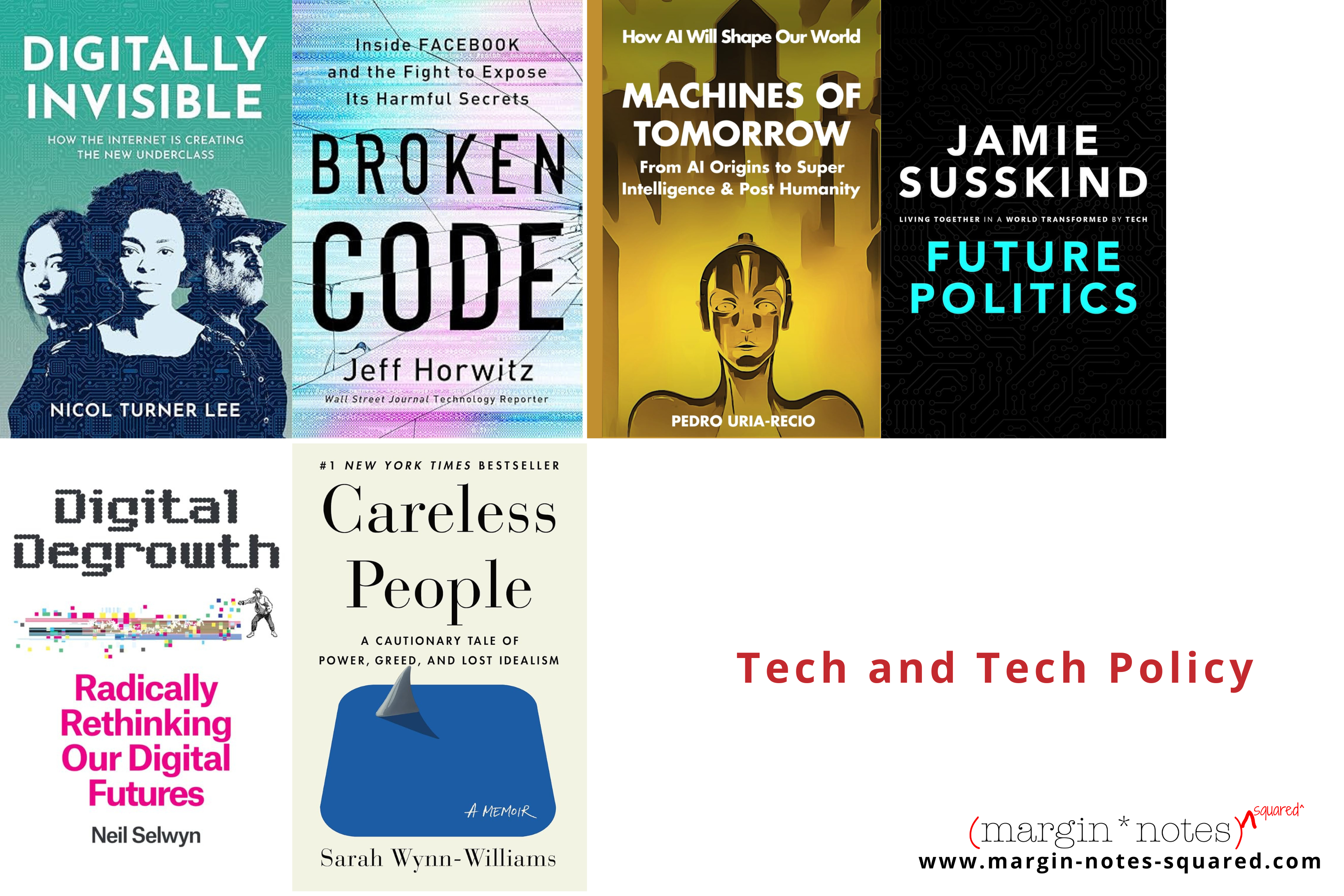
Careless People: A Cautionary Tale of Power, Greed and Lost Idealism, by Sarah Wynn-Williams
Broken Code: The Fight to Expose Facebook’s Toxic Secrets, by Jeff Horowitz
Digitally Invisible: How the Internet is Creating the New Underclass, by Nicol Turner Lee
The Algorithm: How AI Decides Who Gets Hired, Monitored, Promoted, and Fired and Why We Need to Fight Back, by Hilke Schellmen
Machines of Tomorrow: How AI Will Shape Our World, From AI Origins to Super Intelligence and Post Humanity, by Pedro-Uria-Recio and Randy McGraw
The Digital Republic: Taking Back Control of Technology, by Jamie Susskind
The New Fire: War, Peace and Democracy in the Age of AI, by Ben Buchanan and Andrew Imbrie
The Sirens’ Call: How Attention Became the World’s Most Endangered Resource, by Chris Hayes
Viral Justice: How We Grow the World we Want, by Ruha Benjamin
The Information Animal: Human, Technology and the Competition for Reality, by Alicia Wanless
Future Politics: Living Together in a World Transformed by Tech, by Jamie Susskind
Digital Degrowth: Radically Rethinking Our Digital Futures, by Neil Selwyn
Human Compatible: AI and the Problem of Control, by Stuart Russel
Human Rights, Equality and Justice
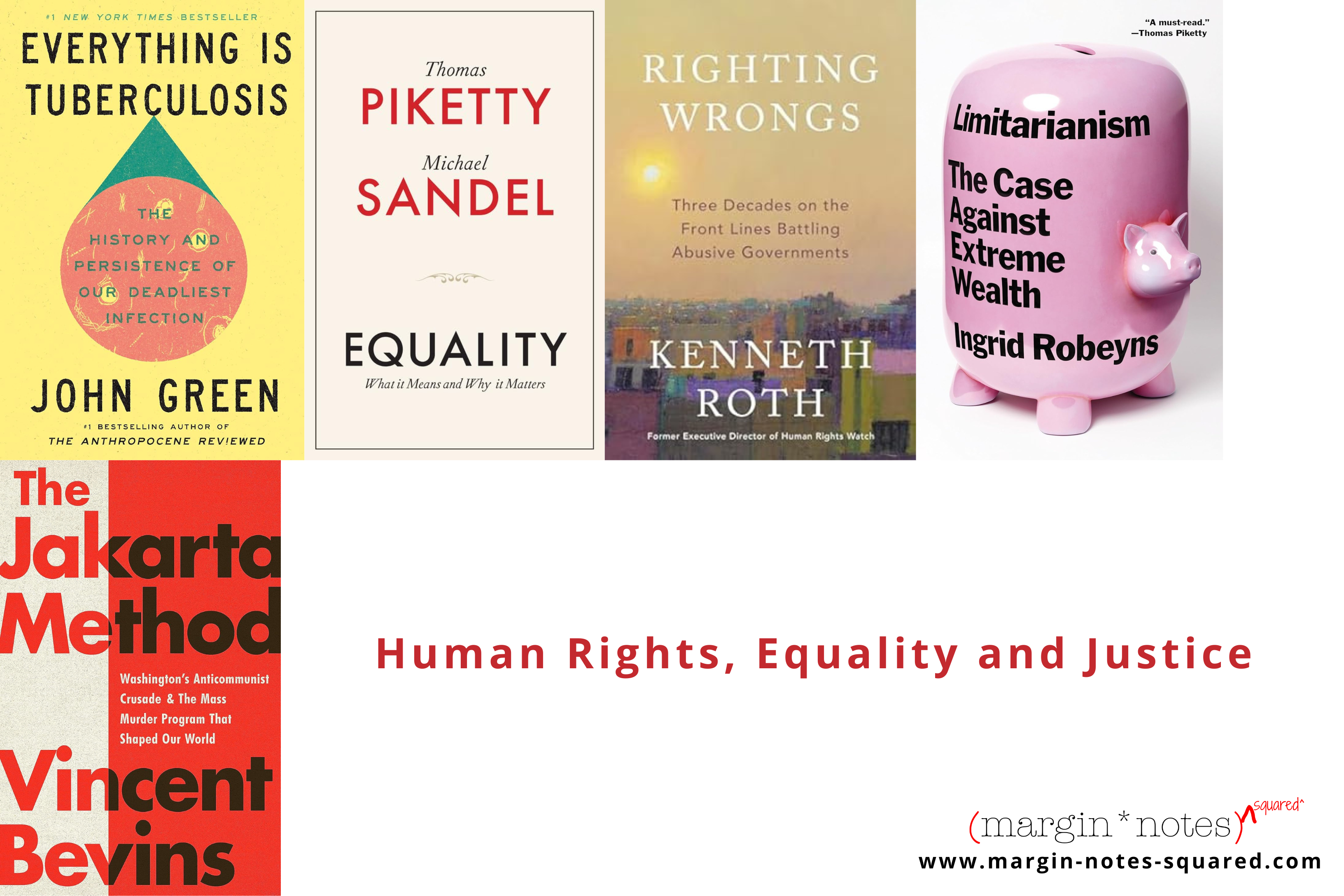
Righting Wrongs: Three Decades on the Front Lines Battling Abusive Governments, by Kenneth Roth
Equality: What It Means and Why it Matters, by Thomas Picketty and Michael Sandel
Everything is Tuberculosis: The History and Persistence of Our Deadliest Infection, by John Green
The Jakarta Method: Washington’s Anticommunist Crusade & the Mass Murder Program that Shaped Our World, by Vincent Bevin
Limitarianism: The Case Against Extreme Wealth, by Ingrid Robeyns
Espionage
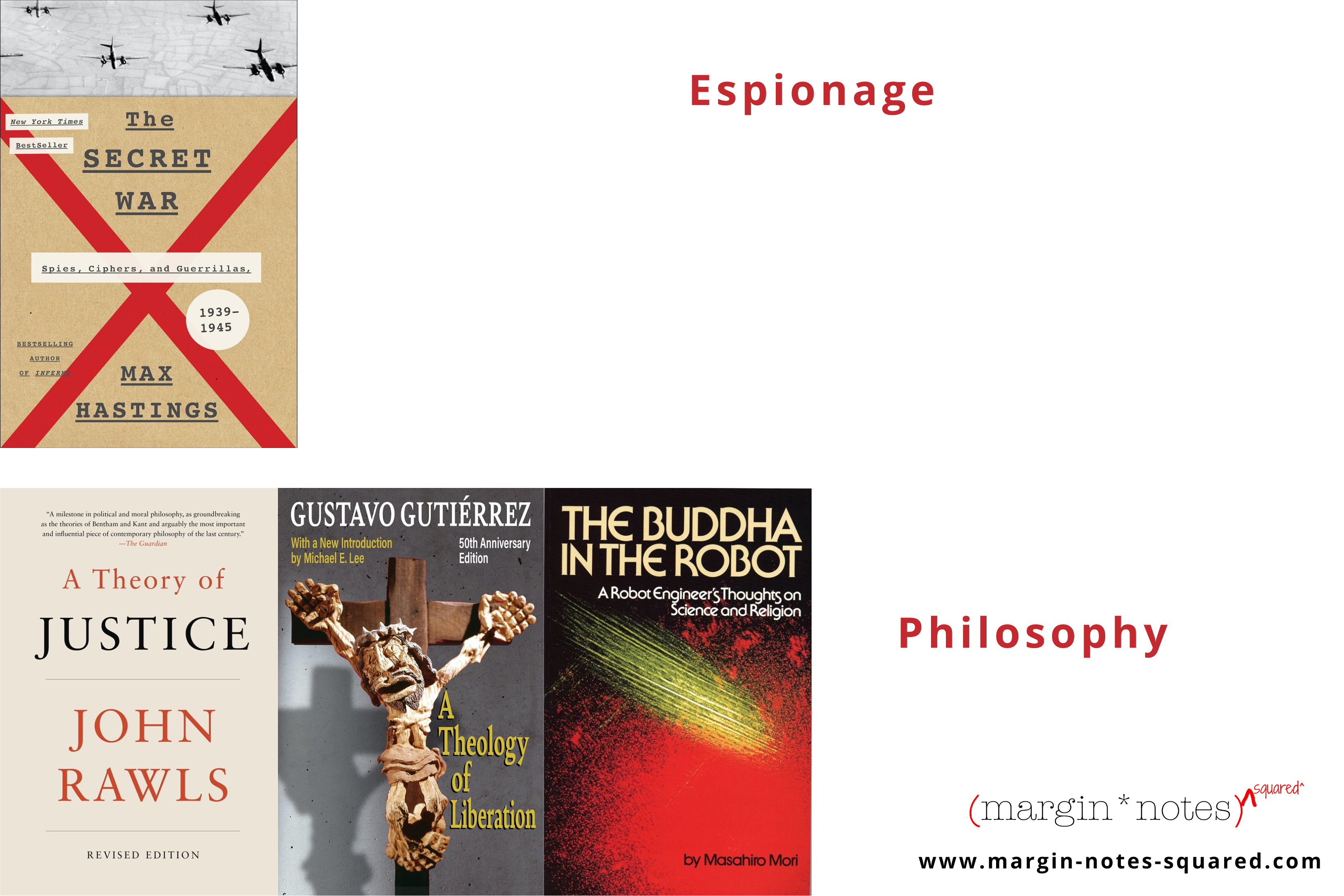
The Secret War: Spies, Codes and Guerillas 1939-1945, by Max Hastings
Philosophy
The Buddha in the Robot: A Robot Engineer’s Thoughts on Science and Religion, by Masahiro Mori
A Theory of Justice, by John Rawls
A Theology of Liberation, by Gustavo Gutiérrez
China
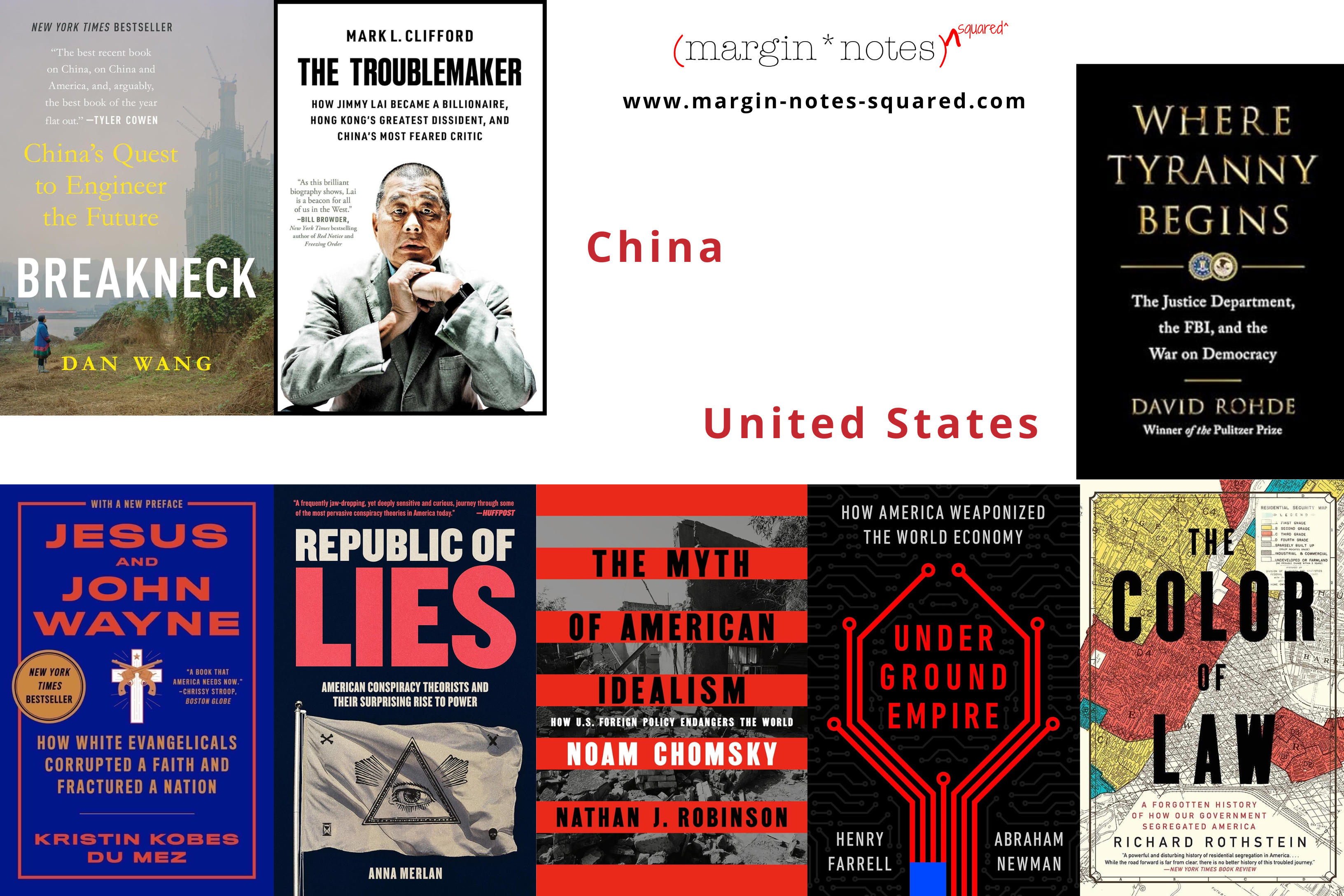
Breakneck: China’s Quest to Engineer the Future, by Dan Wang
The Troublemaker: How Jimmy Lai Became a Billionaire, Hong Kong’s Greatest Dissident, and China’s Most Feared Critic, by Mark L. Clifford
United States
The Color of Law: The Forgotten History of How Our Government Segregated America, by Richard Rothstein
The Myth of American Idealism: How U.S. Foreign Policy Endangers the World, by Noam Chomsky and Nathan J. Robinson
Where Tyranny Begins: The Justice Department, the FBI, and the War on Democracy, by David Rhode
Underground Empire: How America Weaponised the World Economy, Henry Farrel and Abraham Newman
Jesus and John Wayne: How White Evangelicals Corrupted a Faith and Fractured a Nation, by Kristin Du Mez
Republic of Lies: American Conspiracy Theorists and Their Surprising Rise to Power, by Anna Merlan
Palestine, Israel
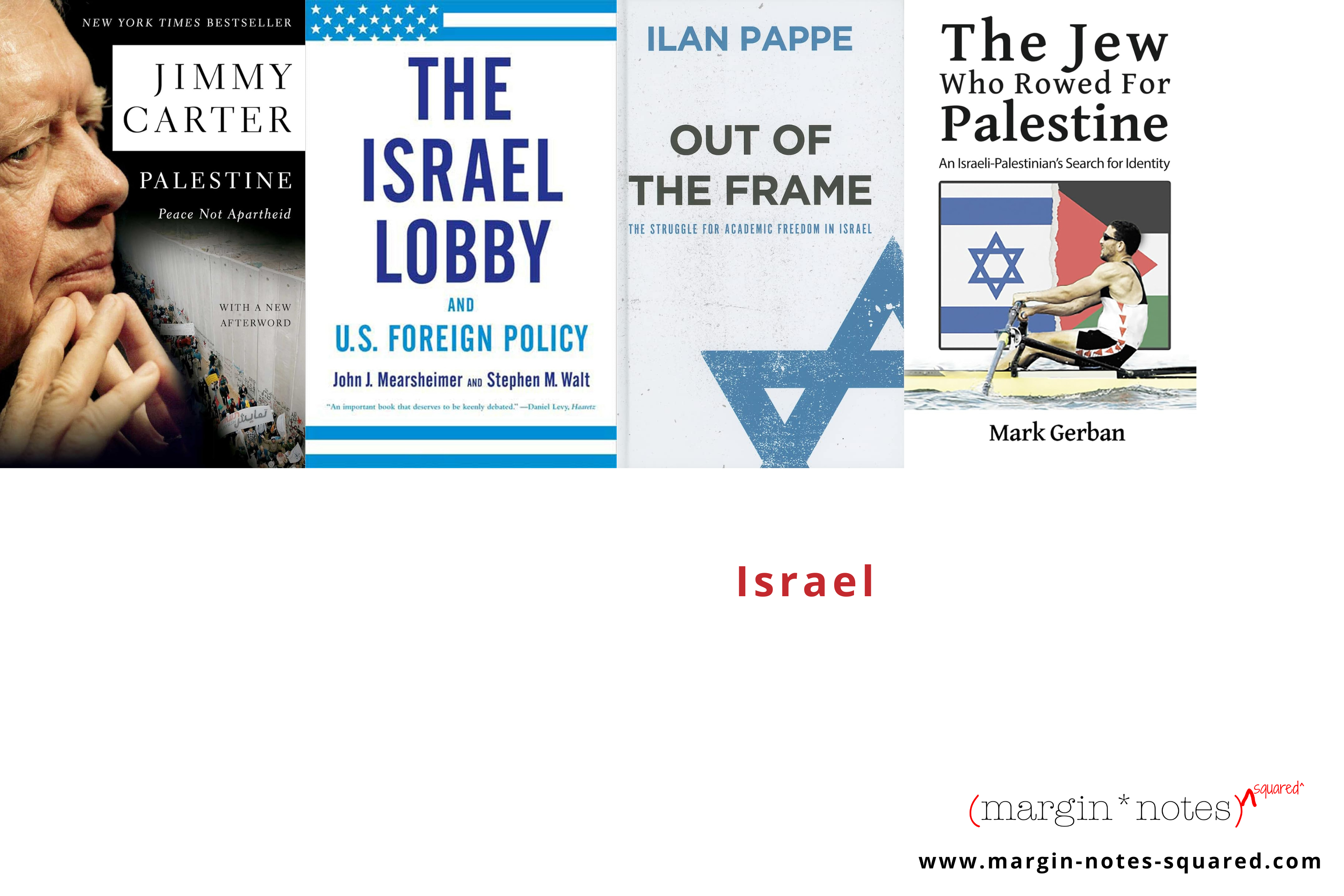
Out of the Frame: The Struggle for Academic Freedom in Israel, by Ilan Pappé
The Jew Who Rowed for Palestine: An Israeli-Palestinian’s Search for Identity, by Mark Gerban
The Israel Lobby and U.S. Foreign Policy, by John J. Mearshimer and Stephen D. Walt
Palestine: Peace not Apartheid, by Jimmy Carter
Democracy and Globalisation
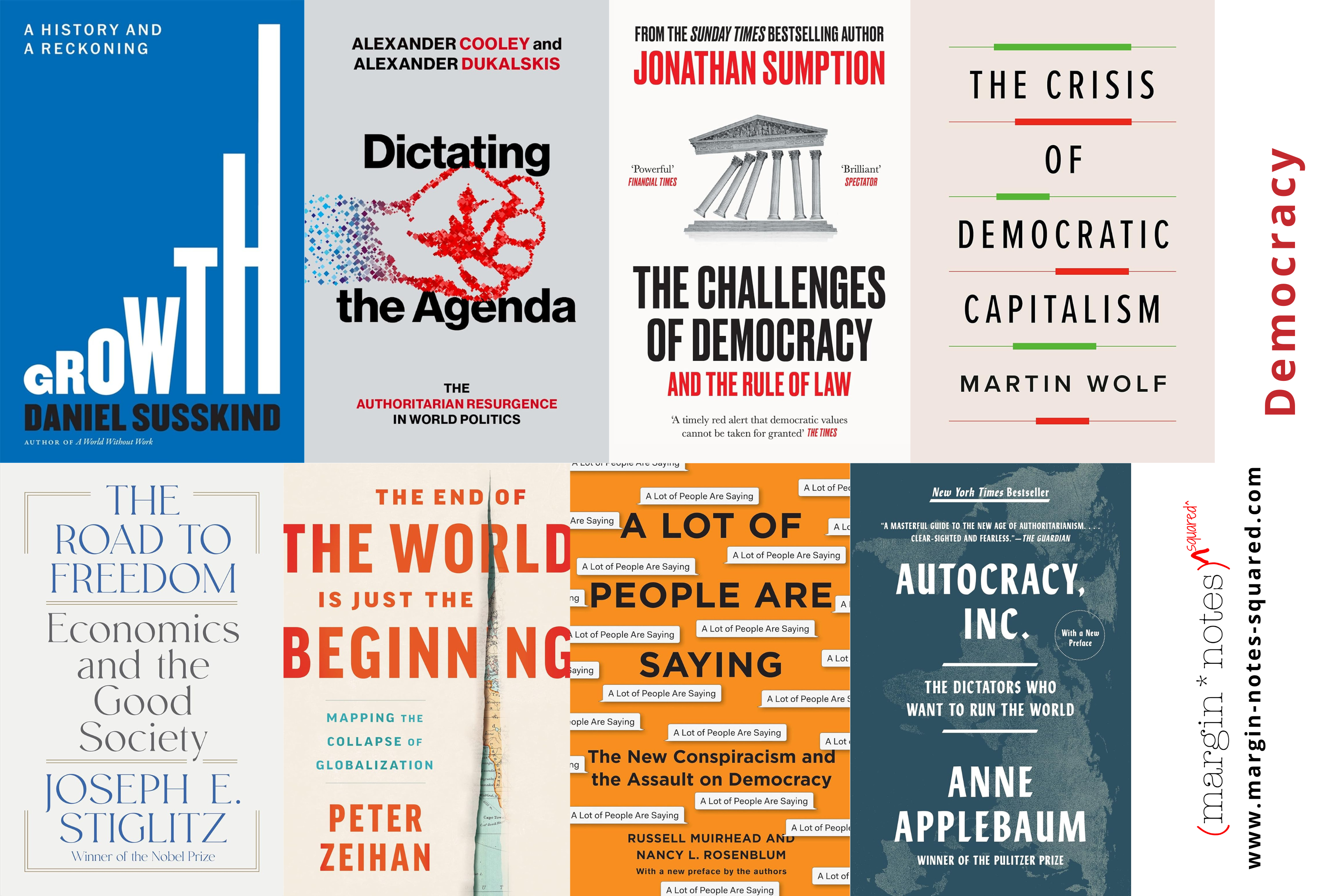
Autocracy Inc: The Dictators Who Want to Run the World, by Anne Applebuam
A Lot of People are Saying: The New Conspiracism and the Assault on Democracy, by Russel Muirhead and Nancy L. Rosenblum
The End of the World is Just the Beginning: Mapping the Collapse of Globalisation, by Peter Zeihan
The Road to Freedom: Economics and the Good Society, by Joseph E. Stiglitz
The Crisis of Democratic Capitalism, by Martin Wolf
The Challenges of Democracy and the Rule of Law, by Jonathan Sumption
Dictating the Agenda: The Authoritarian Resurgence in World Politics, by Alexander Cooley and Alexander Dukalskis
Growth: A Reckoning, by Daniel Susskind
Memoirs, Biography and History
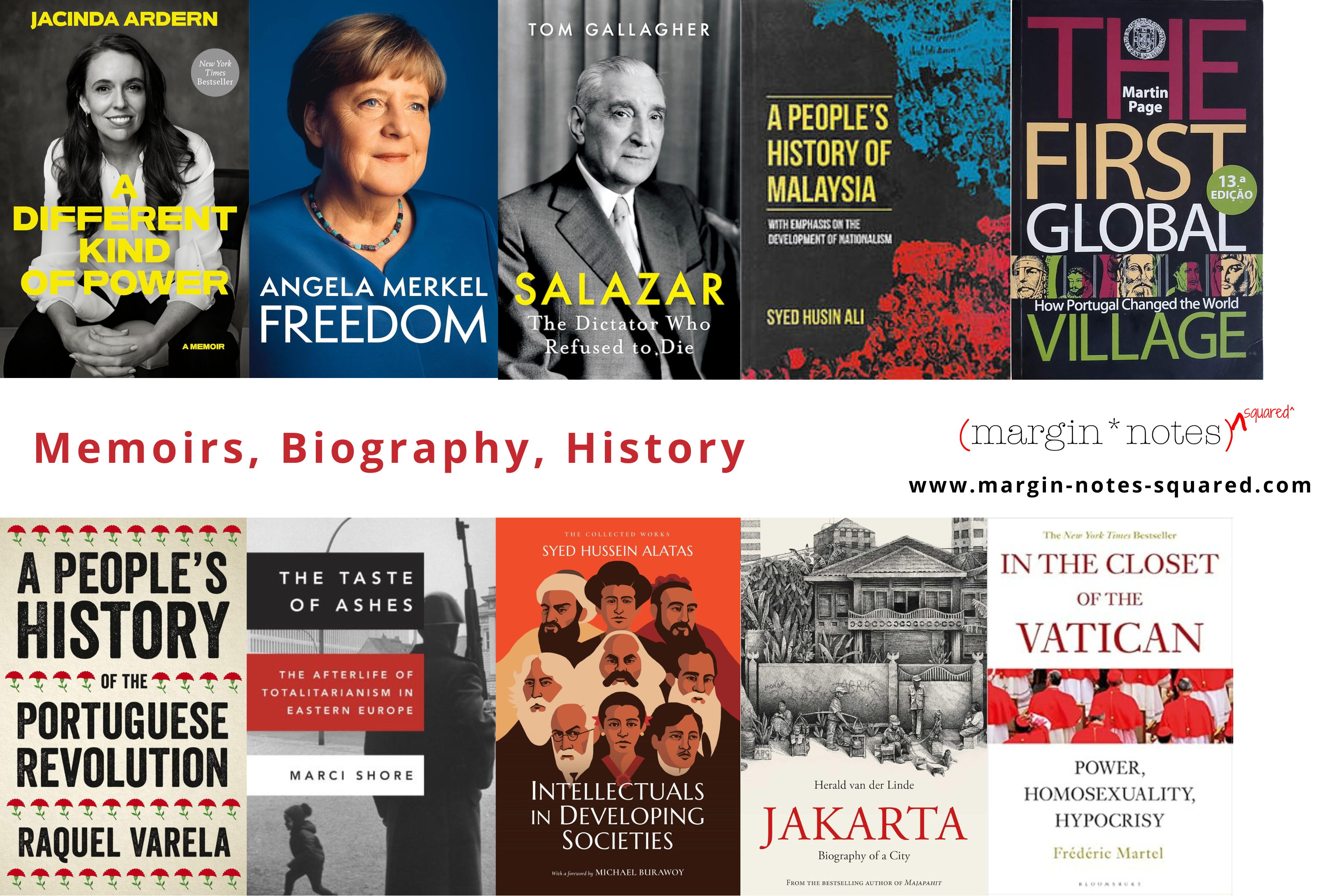
A Different Kind of Power: A Memoir, by Jacinda Ardern
The First Global Village: How Portugal Changed the World, by Martin Page
Freedom: Memoirs 1954-2021, by Angela Merkel
Salazar: The Dictator who Refused to Die, by Tom Gallagher
The Taste of Ashes: The Afterlife of Totalitarianism in Eastern Europe, by Marci Shore
A People’s History of the Portuguese Revolution, by Raquel Varela
A People’s History of Malaysia: With Emphasis on the Development of Nationalism, by Syed Husin Ali
Intellectuals in Developing Societies, by Syed Hussein Alatas
Jakarta: A Biography of a City, by Herald van der Linde
In the Closet of the Vatican: Power, Homosexuality, Hypocracy, by Frédéric Martel
Literature
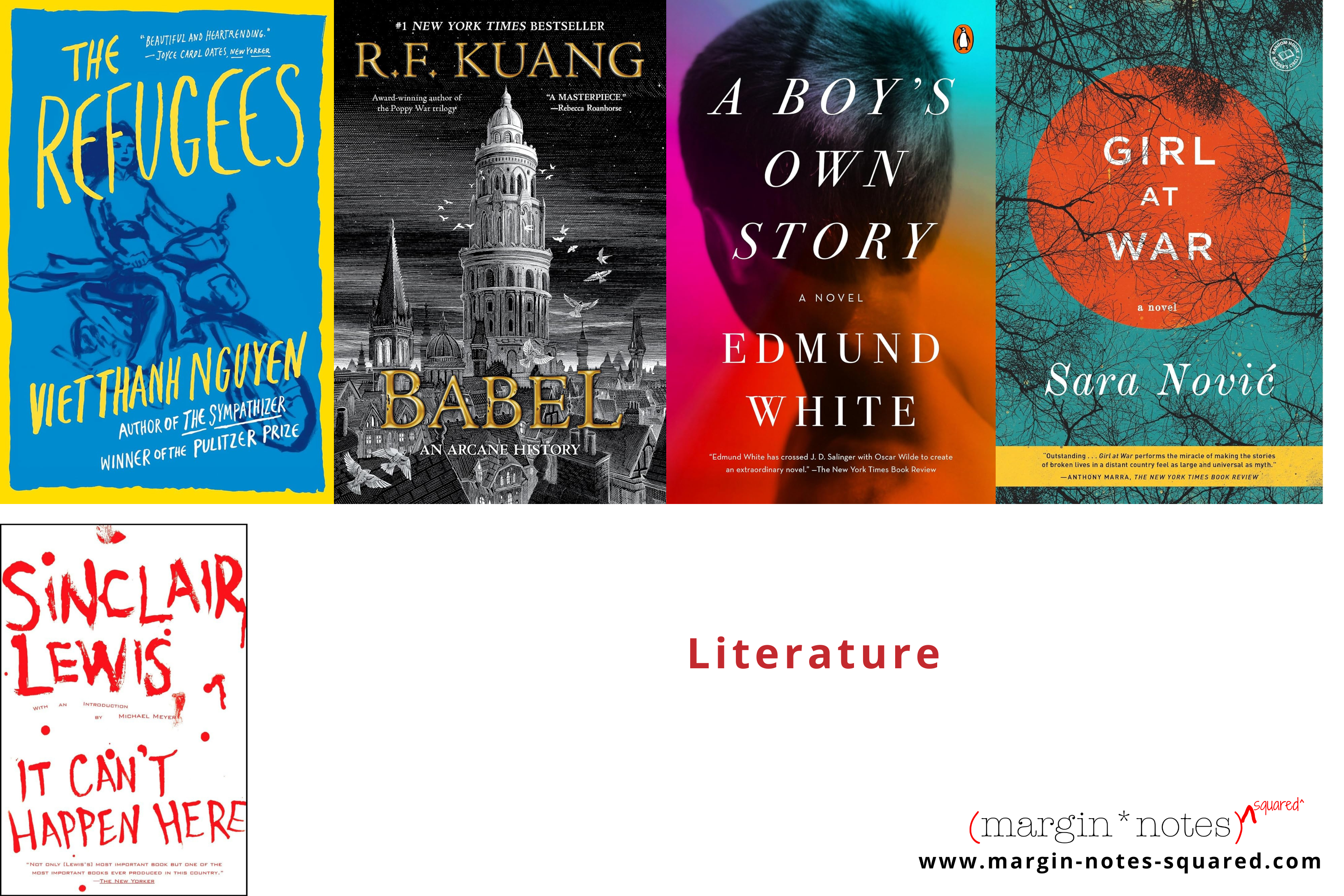
Babel: An Arcane History, by R.F. Kuang
It Can’t Happen Here, Sinclair Lewis
Girl at War, by Sara Nović
A Boy’s Own Story, by Edmund White
The Refugees, by Viet Thanh Nguyen